The Planetary Mass – The Nine o'clock Service
The Cult Mass
After seeing the Living Church article on the Sex Cult abuse of the Nine o'clock Service, I'm reminded of some artefacts I picked up when looking into it all (and the Glasgow Late Late Service), many years ago:
This is the recording of The Nine o'clock Service's "Planetary Masss," a liturgy based on Matthew Fox's spirituality.1
The Nine o'clock Service was a proto-Emerging Church2 project in the 1986-1995, founded out of St Thomas Sheffield and, curiously, a Signs and Wonders Sheffield event put on by Vineyard's John Wimber.
It fell apart when it emerged that the leader, Chris Brain, turned out to have actually been building a sex cult, using the shepherding movement and a provocative spirituality as a guide. 30 years later--finally--a trial has begun.
About the Mass, from Equip.org:
After Fox’s homily, Brain celebrated communion — of a sort. Women dancers in four corners of the room turned in circles repeatedly throughout the prayers and communion. Assistants presented fire, water, and soil. Brain immersed his hands in the soil, saying he was washing them. He thanked Mother God for the gift of air.
Brain repeated Jesus’ words about partaking of communion in his memory. Otherwise, Brain spoke no words of consecration, which may not matter to those Protestants who believe the Lord’s Supper is a memorial service, but matters immensely to Anglicans, who affirm what is called consubstantiation. Most Anglicans do not believe the bread and wine literally become the flesh and blood of Christ, but they do believe in a “real presence” of Christ in the elements of the sacrament.
There’s supposed to be a “real presence” in the Rave Mass, too, but it’s the presence of the Cosmic Christ as lifeforce, not the personal historical figure who died on a cross and rose again.
“As Christ is behind the creative explosion started at the Big Bang, and is the lifeforce of nature’s continuing rebirth on its journey to fulfillment, we break the bread of the universe and drink the blood of the cosmos, a microcosm of the vast macrocosm,” Brain wrote in an essay for Treasures in the Field, a book about worldwide Anglicanism’s understated Decade of Evangelism. Accordingly, Brain alternated between calling the elements “the body and blood of Christ” and “the life of the universe.”
Note that the aftermath and recovery from the trauma was not another Rave, but a service of contemplation -- the opposite:
"I can confirm that former members of the Nine O'Clock Service met together in a Sheffield church for a celebration of the Holy Communion. It was a quiet, meditative service." – Nine O'Clock church relaunches services
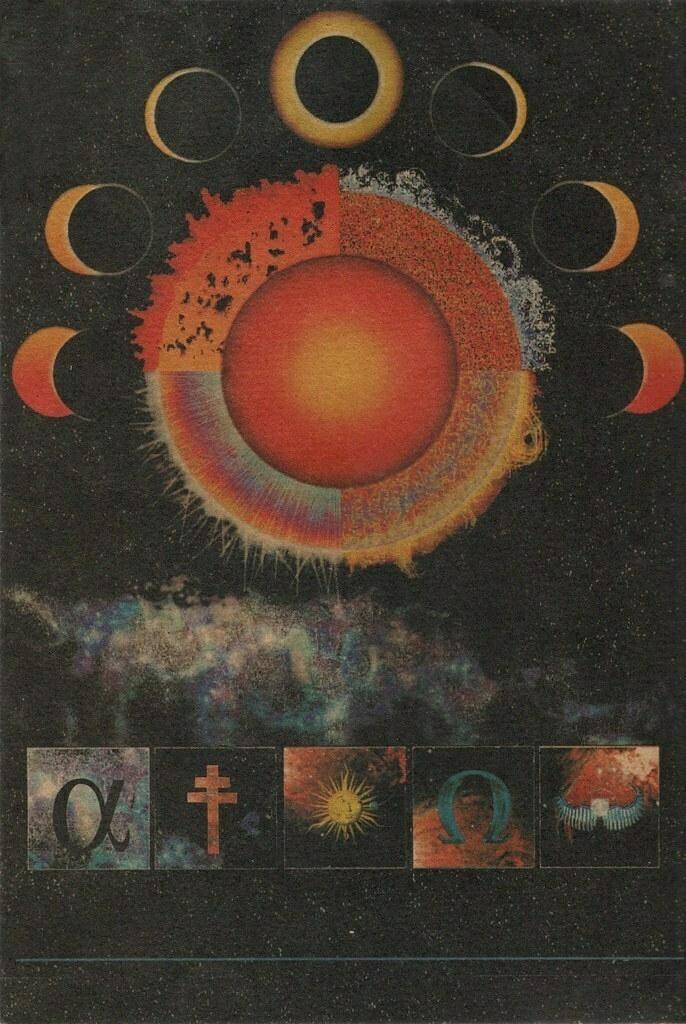
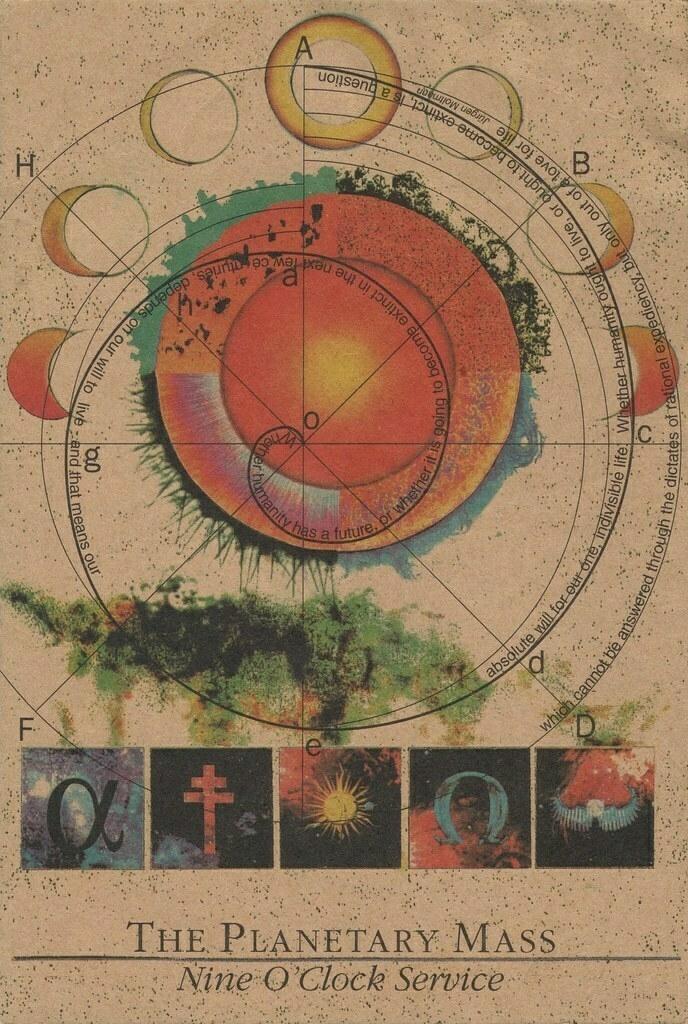
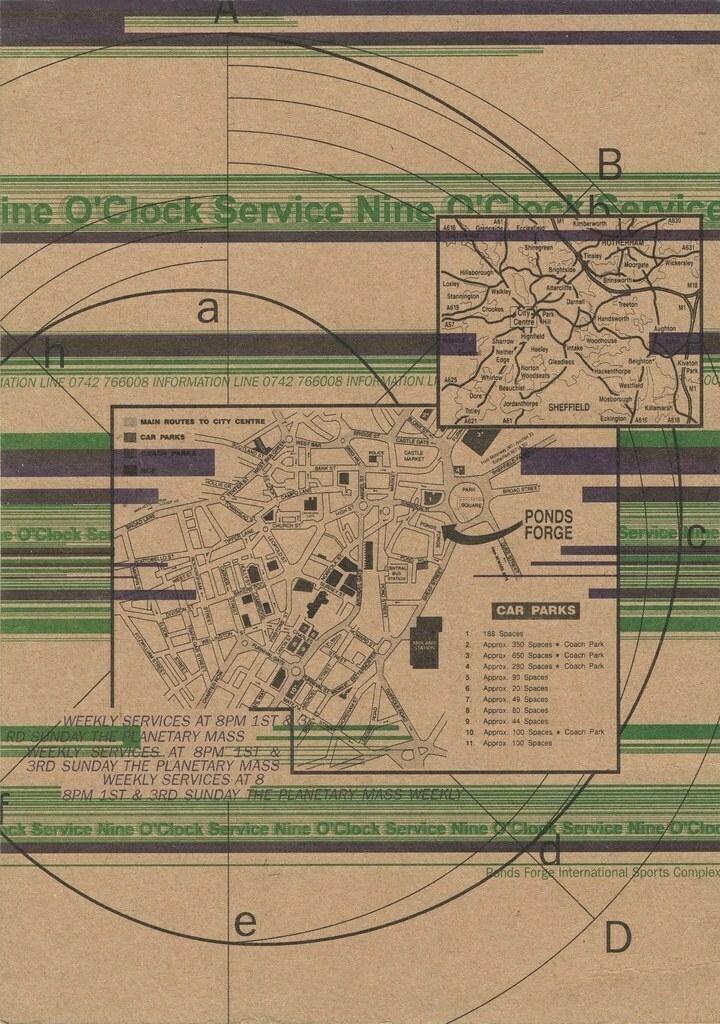
Flyer art from Service/Show Promotions:
Documentary on NOS and Abuse Scandal
and
The defrocked Catholic-turned-Episcopal priest was (with the unlikely influence-pairing of Vineyard revitalizer John Wimber) responsible for inspiring what was arguably the first ever emerging/postmodern congregation in the mid-1980s – the brilliant, controversial, combustible Nine O’ Clock Service. Inspired by a Wimber prophecy at St. Thom‘s in Sheffield and nurtured by Fox’s Creation Spirituality amongst working-class rave culture, the NOS was a potpourri of influences and expression.
↩The Nine ‘O Clock Service: The Vibrant, Troubling Birth of the Emerging Church, by Mike Morrell:
Historians tracing the birth of self-consciously ’emerging’ forms of church – if they seek to trace such things – will quibble about where and when, as historians do. But my best case is that a modest Anglican church in a small northern England city visited by Vineyard leader John Wimber in 1985 is the genesis of all that emerges today: An eclectic band of cultural creatives serious about radical discipleship began to craft one of the most creative, aesthetically appealing, and theologically forward-looking congregations ever – for the 1980s/90s or today. The congregation called itself the Nine O’ Clock Service, and its leader was Chris Brain. Under Chris’s leadership, NOS (as it was known) became a model in the Church of England and beyond – a template for what later became Fresh Expressions, as well as the alternative worship movement, which eventually spread (in at least some respects) to American innovators in the Young Leaders Network, which eventually became Terra Nova and then Emergent Village.
↩